Most recruitment agencies have websites that look the part.
They explain what they do, outline their sectors, and give potential clients a sense of credibility. On the surface, it feels like a necessary piece of the business is covered.
But when it comes to attracting candidates, most of those sites fall short. There are no live roles. No clear reason for someone to stay and explore. No direct path from interest to application.
So candidates leave, and the website ends up acting more like a brochure than something that actively contributes to hiring.
Most recruitment websites are effectively dead
The issue usually isn’t a lack of intent. Most agencies understand that their website should play a bigger role in candidate generation.
The problem is how disconnected everything feels in practice.
Jobs sit in the CRM. From there, they’re pushed out to job boards. The website either gets updated manually or ignored altogether because keeping it current takes time. Over time, that creates a gap between what the business is actually doing and what the website shows.
Candidates are sent elsewhere to find opportunities, applications come in through platforms you don’t control, and your own site becomes less relevant with every role that goes live somewhere else.
That’s where the real cost shows up: missed candidates and wasted traffic.
The assumption that slows everything down…
When agencies do decide to fix this, they often assume it requires a bigger change than it actually does.
Do you rebuild the site? Bring in developers?
So it gets pushed back because it feels like a project. And most agencies don’t have time for another project.
What actually needs to change
The shift is simpler than that.
Instead of treating your website as something static, it needs to reflect what’s happening in your business right now.
That means:
- Your site update automatically
- Candidates can browse live vacancies
- Applications come directly back to you
Once that happens, your website stops being passive and starts doing real work.
Where idibu’s Job Listing Widget fits in
idibu’s Job Listing Widget is built around that exact shift.
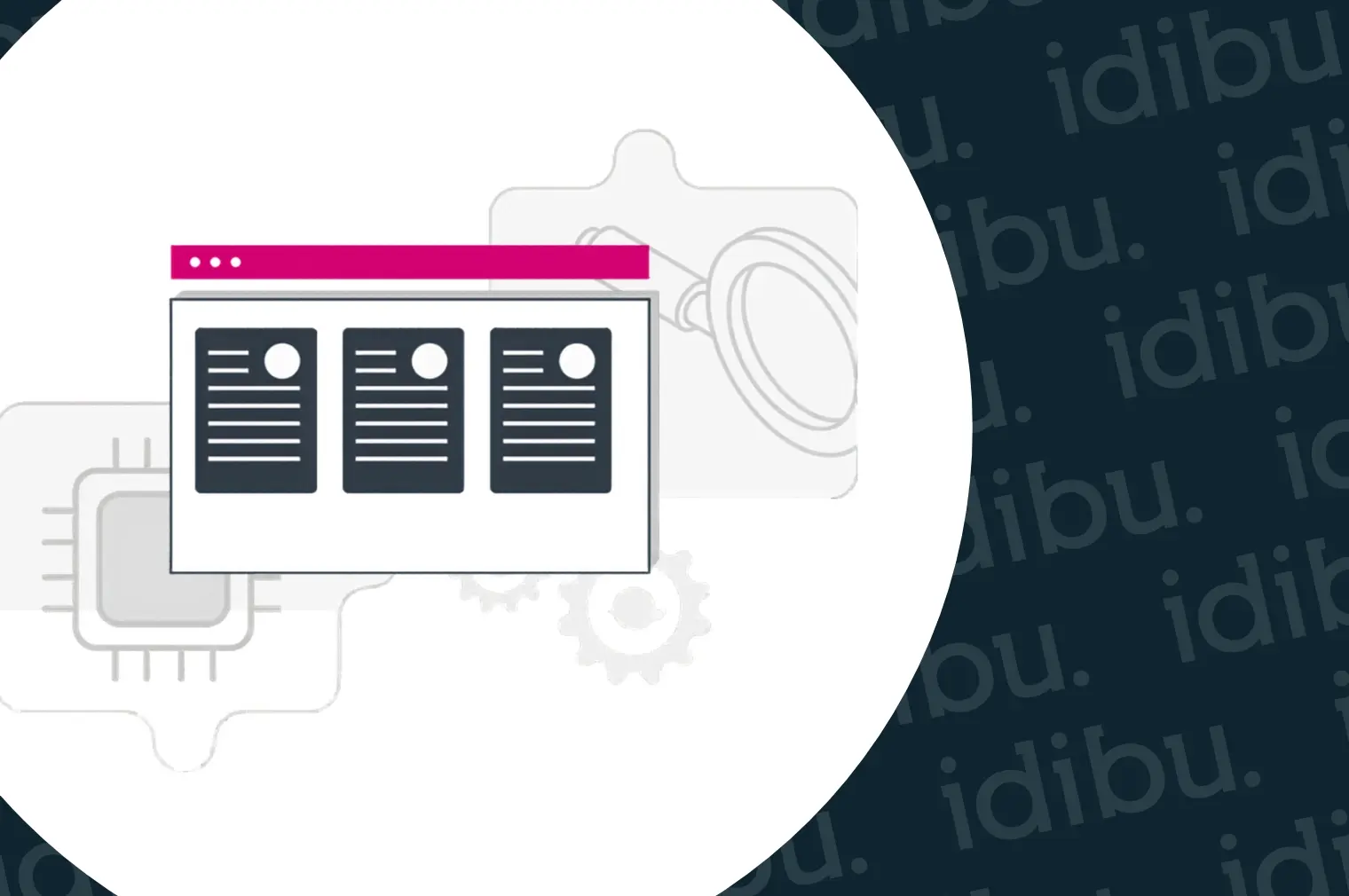
It pulls through the roles you post via idibu and displays them on your website without any manual input. That’s it. No rebuild involved and no need for development resources.
You install a small snippet, and your jobs appear. From that point on, your website stays in sync with your live vacancies.
The goal is simple: add live jobs to any website, quickly and without complexity.
What this changes for your business
On paper, it might feel like a small change. In reality, it affects how your entire candidate journey works.
You keep candidates on your site
Instead of sending all traffic to job boards, you give people a reason to stay.
You take back control of applications
Candidates apply through your environment, not someone else’s.
You look like an active agency
A site with live roles signals momentum. It shows you’re in the market, not just talking about it.
You remove manual work
No more copying and pasting jobs across platforms.
Built for recruitment businesses
This isn’t designed for teams with dedicated developers or complex tech stacks.
It’s for recruitment businesses that are running lean, often using website builders like Wix, Squarespace, or Webflow, and don’t have the time or resources to manage complicated integrations.
The focus is on speed and simplicity. You can go live within 24 hours - and once it’s in place, it requires very little ongoing effort.
The real cost of doing nothing
If your website isn’t showing your jobs, you’re effectively outsourcing all candidate engagement to other platforms.
Which means:
- You pay to access your own candidates
- You compete in crowded environments
- You lose visibility over what’s working
And all the traffic you’ve already earned becomes less valuable.
This is the easiest upgrade you can make
There aren’t many changes you can make in under a day that improve how your recruitment business performs. This is one of them.
Add your live jobs to your website, give candidates a reason to stay, and start turning traffic into applications.
Learn more about the Job Listing Widget.
Or speak to the team about getting set up.













No Comments Yet
Let us know what you think